

There is something interesting about learning software development: the more you understand, the more you realise that writing code is only one part of building a successful software product.
When I started my journey, my attention was primarily on the frontend. I was fascinated by how websites were structured, how interfaces were designed and how different elements came together to create an experience users could interact with.
At that point, building a functional and visually appealing interface was exciting enough.
However, as I continued learning, my curiosity moved beyond what users could see. I wanted to understand what happened behind the interface, how applications processed information, how databases worked, how different components communicated and how complete systems were structured.
That curiosity introduced me to backend development.
Over time, my understanding of software engineering changed significantly. Today, I spend considerably more time thinking about architecture, system design, cloud infrastructure and DevOps because I have come to understand that building an application is not simply about making it work. It is about understanding how to make it reliable, secure, maintainable and capable of serving real users.
This is the story of how that shift happened and some of the lessons I have learned along the way.
1. Starting With Frontend Development
My journey began with frontend development.
I wanted to understand how websites worked and how developers transformed ideas into interactive digital experiences.
I started learning the technologies and concepts behind web interfaces, gradually developing an understanding of how the browser works, how components are structured and how users interact with applications.
Frontend development taught me an important lesson: technology should be built around people.
An application might have excellent functionality, but if users cannot understand how to navigate it, the experience is incomplete.
I became interested in creating interfaces that were functional, responsive and easy to use.
However, I eventually realised that the frontend was only the visible part of a much larger system.
A login form, for example, is not just a collection of input fields and buttons. Behind it are authentication mechanisms, database operations, security considerations, application logic and communication between different services.
I wanted to understand those things too.
2. Moving Into Backend Development
My next major step was learning backend development.
This was where I began looking at software from a different perspective.
Instead of concentrating only on what users interacted with, I started exploring what happened behind the scenes.
I became interested in APIs, databases, authentication, business logic, server-side processing and how different components communicate.
I began understanding that a complete application needs more than a good interface.
It needs a properly structured backend, a reliable database, well-defined relationships between its components and a clear way of managing information.
This stage of my journey helped me appreciate the importance of understanding the entire application rather than focusing on individual features.
It also introduced me to a bigger question:
What happens when the application grows beyond what its initial architecture was designed to handle?
That question would eventually influence the direction of my learning.
3. Discovering the Rapid Growth of AI-Assisted Development
Artificial intelligence introduced another major shift in my approach to software development.
As AI coding tools became increasingly capable, I started paying closer attention to how they were changing the software development process.
Tools such as Claude AI and Claude Code opened up new possibilities for developers.
Tasks that previously required significant manual effort could now be approached differently. Developers could use AI to explore unfamiliar technologies, analyse codebases, implement features, investigate errors and accelerate development.
I became particularly interested in understanding how to use these AI development tools effectively.
Rather than simply treating AI as a tool for generating code, I decided to learn how to work with AI developers to build complete software systems.
This required a different mindset.
I realised that getting good results from AI is not just about writing prompts. It requires being able to explain what you want to build, understand the technical requirements, evaluate proposed solutions and recognise when an implementation is structurally wrong.
An AI tool can generate hundreds or even thousands of lines of code, but that does not automatically mean the resulting system has a good architecture.
It can implement a feature without necessarily understanding the long-term implications of the decisions being made.
That realisation changed my priorities.
I began shifting more of my attention towards understanding how systems should be designed before using AI tools to implement them.
4. Why System Design Became More Important to Me
One of the biggest lessons I have learned is that the quality of a software system is heavily influenced by the decisions made before development begins.
This is where system design becomes important.
Before building a system, I want to understand what the system is supposed to achieve, who will use it, what its major components should be and how those components will communicate.
I want to understand the data structures, database relationships, application architecture, user roles, permissions, integrations and potential limitations.
For example, consider building a school management platform.
At first glance, it might appear to be a straightforward application involving students, teachers, classes and report cards.
But when you examine the requirements more closely, the complexity becomes clearer.
How should academic years be structured? How should different educational institutions manage their records? How should teachers access their assigned classes? How should student information be protected? How should report cards be calculated? What happens when the internet connection disappears? How should the system handle thousands of records across multiple institutions?
These are not simply coding questions. They are system design questions.
Understanding them before development makes it easier to provide AI development tools with clear technical direction.
It also makes it easier to identify architectural mistakes before they become expensive problems.
My approach is increasingly becoming this:
Understand the problem. Design the system. Define the architecture. Then use the appropriate development tools to bring the system to life.
AI can accelerate implementation, but engineering judgment must guide the process.
5. Discovering the Importance of Cloud Computing and DevOps
Another important part of my journey has been cloud computing and DevOps.
I gradually realised that building an application is only one part of the responsibility. Once the application is ready, there are several other questions that need to be answered.
Where will it be deployed? Which infrastructure services should it use? How will the database be managed? How will the application communicate with other services? How will sensitive information be protected? How will traffic be managed as the number of users increases? How will updates be deployed without unnecessarily disrupting users? How can repetitive development and infrastructure tasks be automated?
These questions pushed me to explore cloud computing and DevOps more seriously.
Through professional training and practical learning, I developed an interest in AWS and the different services used to build and manage cloud infrastructure.
I explored services and concepts involving EC2, S3, IAM, VPC, RDS, cloud security, networking and infrastructure management.
I also developed an interest in Docker, Git, CI/CD pipelines, Linux environments and deployment automation.
What I find particularly interesting about this field is how it connects software development with the infrastructure required to operate software reliably.
System design helps me understand how a particular application should be structured. Cloud computing helps me understand where and how that application can run, which services are appropriate and how the infrastructure should be configured. DevOps helps me understand how to automate deployment, manage development processes, monitor applications and make software delivery more reliable.
These disciplines complement one another.
I do not see them as completely separate areas of knowledge. I see them as interconnected parts of building and maintaining modern software systems.
6. Turning These Lessons Into Real Products
For me, the most valuable learning happens when knowledge is applied to real problems.
One of the projects through which I have explored these ideas is EduIgnite.
EduIgnite: Engineering Technology for Education in Cameroon
EduIgnite is a comprehensive school management and learning platform designed for educational institutions across Cameroon.
It supports institutions across different levels of education, including nursery, primary, secondary and higher education.
The platform brings different academic and administrative activities into one connected environment. These include student management, attendance, academic records, report cards, fees, communication, digital learning tools and other school operations.
Developing a platform of this nature requires thinking beyond individual features.
Different educational institutions have different administrative structures and academic requirements. A nursery and primary school does not necessarily operate in the same way as a secondary school or university. The architecture must accommodate these differences while maintaining consistency across the platform.
There are also important considerations involving user permissions, data management, document generation, offline capabilities, infrastructure and application reliability.
One particularly important aspect of EduIgnite is its consideration of the realities of education in Cameroon, including bilingual requirements and environments where internet connectivity is not always reliable. The platform is also designed to provide access through web, mobile and desktop environments, including offline capabilities.
However, EduIgnite is not a project I would describe as the work of one individual.
I serve as its Chief Technology Officer and Co-Founder, responsible for its technical direction and engineering. My co-founder, Engr. Nsame Rene Tamjong, serves as the Chief Executive Officer and Co-Founder. His leadership and contribution to the vision and development of the business deserve recognition.
Building EduIgnite is a collaborative journey, and I believe the work involved in creating technology products should recognise the people who contribute to making those products possible.
Other Projects and Product Experiences
Beyond EduIgnite, I have also worked on other digital products and platforms that reflect my broader interest in technology.
SMART Centre Cameroon — a digital platform for a company operating in water, sanitation and solar solutions. Its website brings together an online product catalogue, service information, training and customer enquiries.
NBN MARKET — an independent product-discovery platform developed under NBN TECH. The idea behind NBN MARKET is to help people discover products worth buying by bringing together product information from different retailers and categories. It focuses on product discovery rather than operating as a conventional online store.
These projects represent different applications of technology, but they share one underlying principle: building digital products around practical needs.
7. The Engineer I Am Working Towards Becoming
I have come to understand that software engineering is much broader than mastering a particular programming language or framework.
Technologies change. Frameworks evolve. Development tools become more powerful. Artificial intelligence continues to introduce new ways of working.
But the ability to understand problems, make sound architectural decisions, design reliable systems and evaluate technical solutions remains extremely important.
This is why I am increasingly interested in becoming a well-rounded software and cloud engineer.
I want to understand how applications are designed, how infrastructure supports them, how security is implemented, how systems scale and how development processes can be automated.
I am also interested in exploring the relationship between software, hardware, smart electronics and emerging technologies. I believe some of the most interesting engineering opportunities exist where these different disciplines meet.
8. Advice to Anyone Learning Software Development
If there is one thing I would encourage anyone beginning a journey in software development to understand, it is this:
Do not limit yourself to learning how to write code. Learn how to understand the problems that code is supposed to solve.
Start somewhere.
Learn frontend development if that is what interests you. Explore backend development when you become curious about what happens behind the interface. Learn databases, APIs and application architecture.
Pay attention to artificial intelligence and understand how to use it responsibly and effectively. But do not allow AI tools to replace your ability to think.
If you are using AI to build an application, make an effort to understand its architecture, the decisions being made and the systems being created.
Learn about deployment, cloud infrastructure, security and DevOps. Understand what happens after the code leaves your development environment.
Most importantly, build real things.
You will learn lessons from developing and maintaining a real product that you may never encounter by simply watching tutorials. You will make mistakes, encounter unexpected problems and discover that some of your initial assumptions were wrong.
Those experiences are part of becoming an engineer.
You do not need to understand everything before starting. You simply need to remain curious, keep learning and gradually expand your understanding.
Final Thoughts: The Journey Is Still Ongoing
Looking back, my journey has moved through several stages.
I started with frontend development, became interested in backend engineering, discovered the growing possibilities of AI-assisted development and gradually shifted more of my attention towards system design, cloud computing and DevOps.
Each stage changed how I understood the previous one.
Today, when I think about building a software product, I am not only thinking about the code that needs to be written. I am thinking about the problem, the architecture, the infrastructure, the security requirements, the deployment strategy and how the system will be maintained as it grows.
I am still learning, experimenting and building. There are many areas I want to explore, and I consider that an important part of being an engineer.
My ambition is not simply to become someone who can develop applications quickly. I want to become an engineer who understands how to turn ideas into reliable, useful and sustainable technology.
Because ultimately, the goal is not just to build software. It is to engineer systems that solve problems and create lasting value.
And that journey is still unfolding.
Found this useful?
Give it a like and share it with someone who's building.
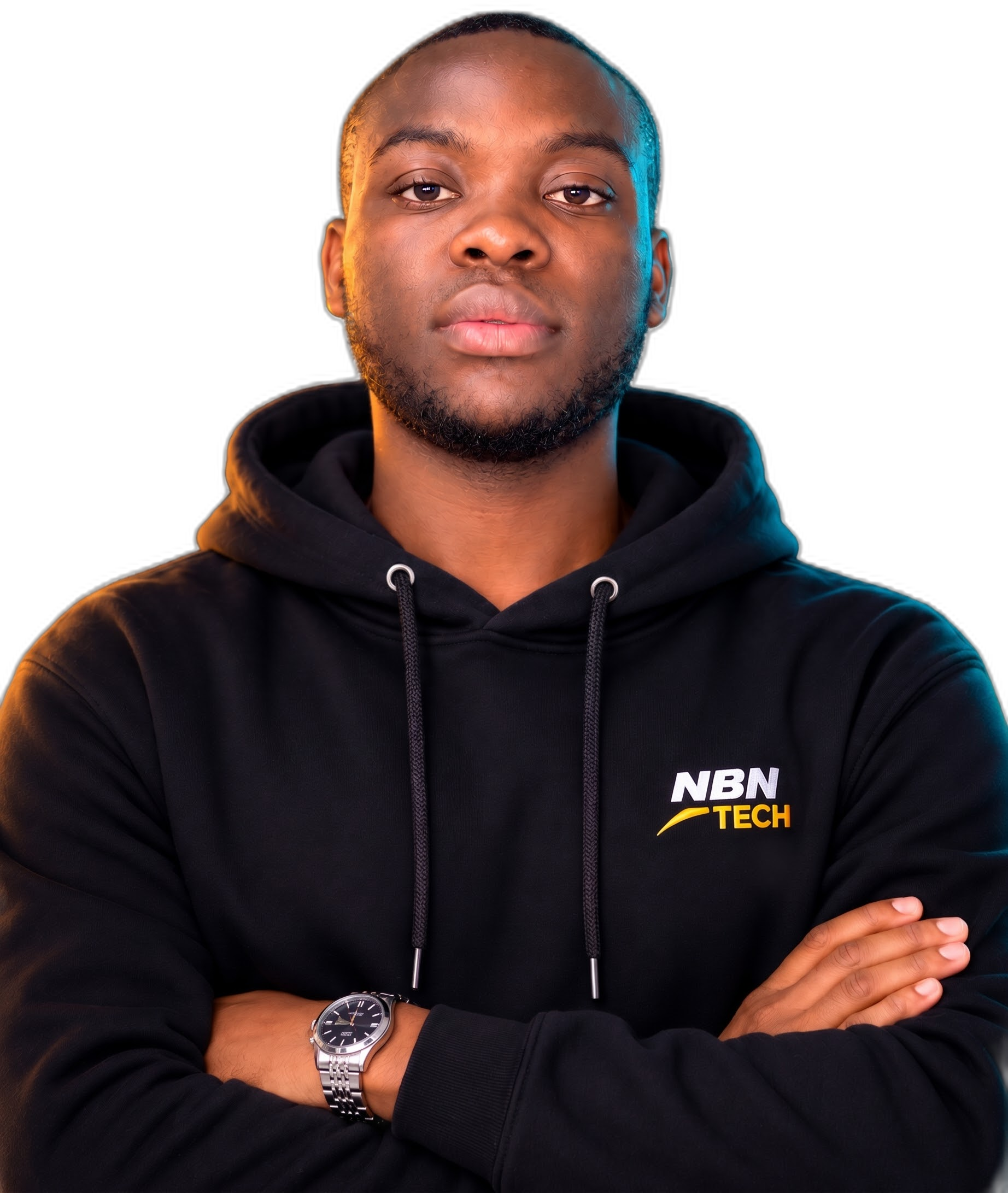
Written by
Ndimih Boclair Nghochu
Software Engineer, Cloud & DevOps. Founder of NBN TECH; Co-founder & CTO of EduIgnite, Klass8 and Ebenesaid. Building practical software that lasts.
More about meComments(1)
- MJMr Jude10d ago
This is inspiring, thanks for this masterpiece